
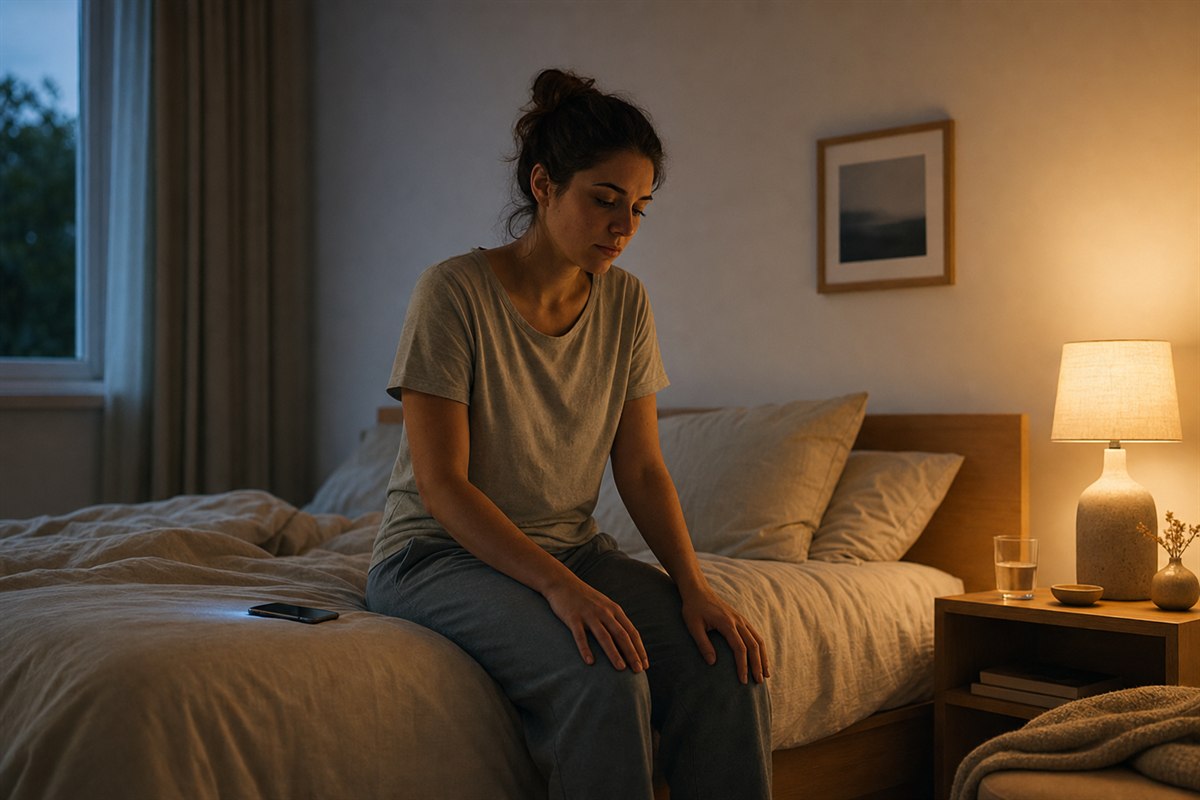
Most advice about winding down at night has a hidden assumption baked into it: that you have the energy to do it. Fifteen-minute routines, eight-step checklists, “pick whichever of these fits you” — all of it assumes the hard part is finding the time. For a lot of nights, that’s not the problem. You could have three free hours and still end up sitting on the edge of the bed, still dressed, doing nothing, because you don’t have it in you to decide what “relaxing” should look like tonight.
That’s a different problem than time scarcity, and it needs a different fix.
Why “just relax” doesn’t work when you’re this tired
There’s a real, well-documented reason choosing to relax can feel harder than the day that came before it. Every decision you make — what to answer, what to wear, what to eat, what to say instead of what you’re thinking — draws on the same limited mental resource. Psychologists call the tail end of that resource decision fatigue, and it means that by 9pm, even a small decision (“should I stretch or take a bath or read?”) can feel disproportionately heavy. You’re not being lazy or dramatic. You’re running a system that’s already spent most of its fuel on everything before this moment.
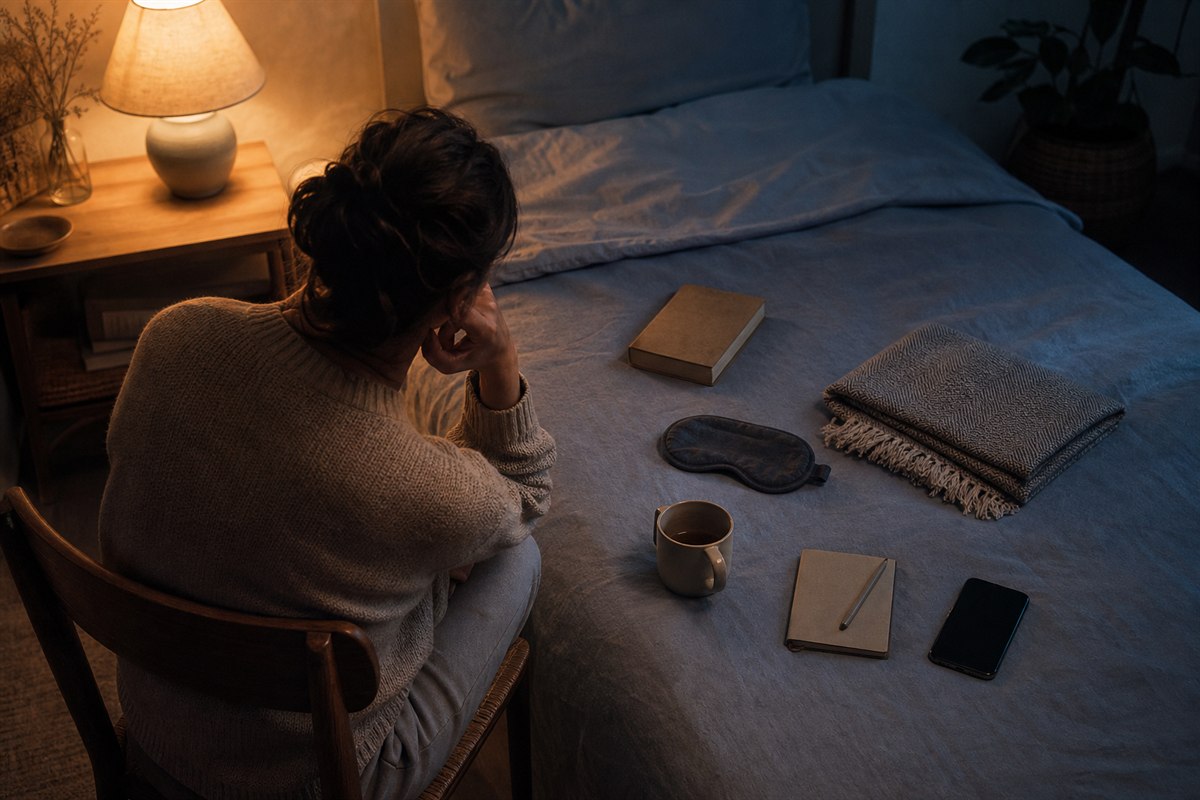
That matters because it explains why so much wind-down advice quietly fails: it hands you a menu right when your capacity to choose from a menu is at its lowest for the entire day.
The problem with “pick whichever works for you”
Open almost any article on this topic and you’ll find a list — eight ways to unwind, fourteen rituals, thirty ideas. The advice itself is usually fine. The format is the issue. A list is a set of decisions disguised as flexibility, and flexibility is the last thing that helps when deciding is the thing you’re out of energy for. Even the more thoughtful versions of this advice, the ones that scale a routine to how much energy you have left, still ask you to first judge your own energy level and then choose a path. That’s two decisions before you’ve done anything at all.
What actually helps on a genuinely empty night isn’t more options. It’s the removal of options.
A routine with nothing to decide
This isn’t a menu — it’s one fixed sequence, done the same way every time, so there’s nothing left to figure out once you start. That repetition is doing real work: sleep researchers point to routine consistency itself, not which activities are in it, as what actually signals to your body that the day is ending.
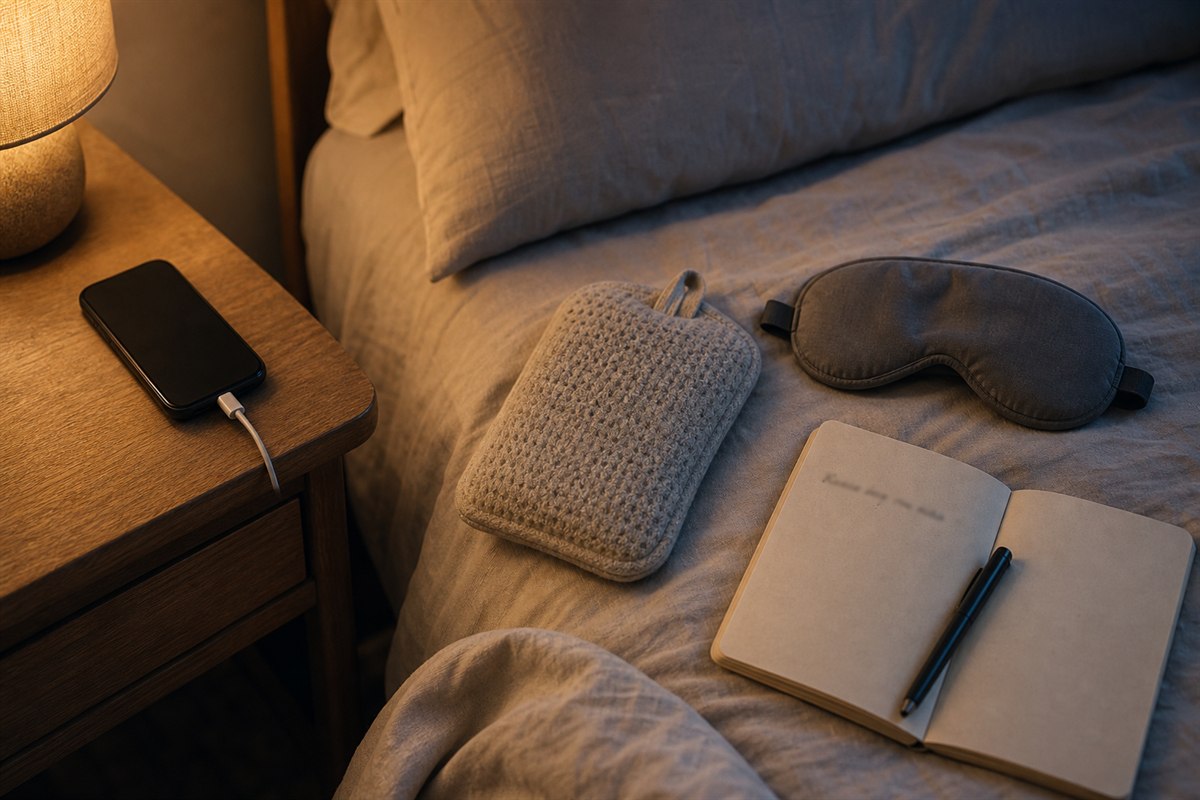
One trigger to start it. Pick a single physical cue that means “this is happening now” — plugging your phone in across the room, for example. Not because the phone itself is the enemy, but because a consistent trigger does the deciding for you before you’re tired enough to talk yourself out of it.
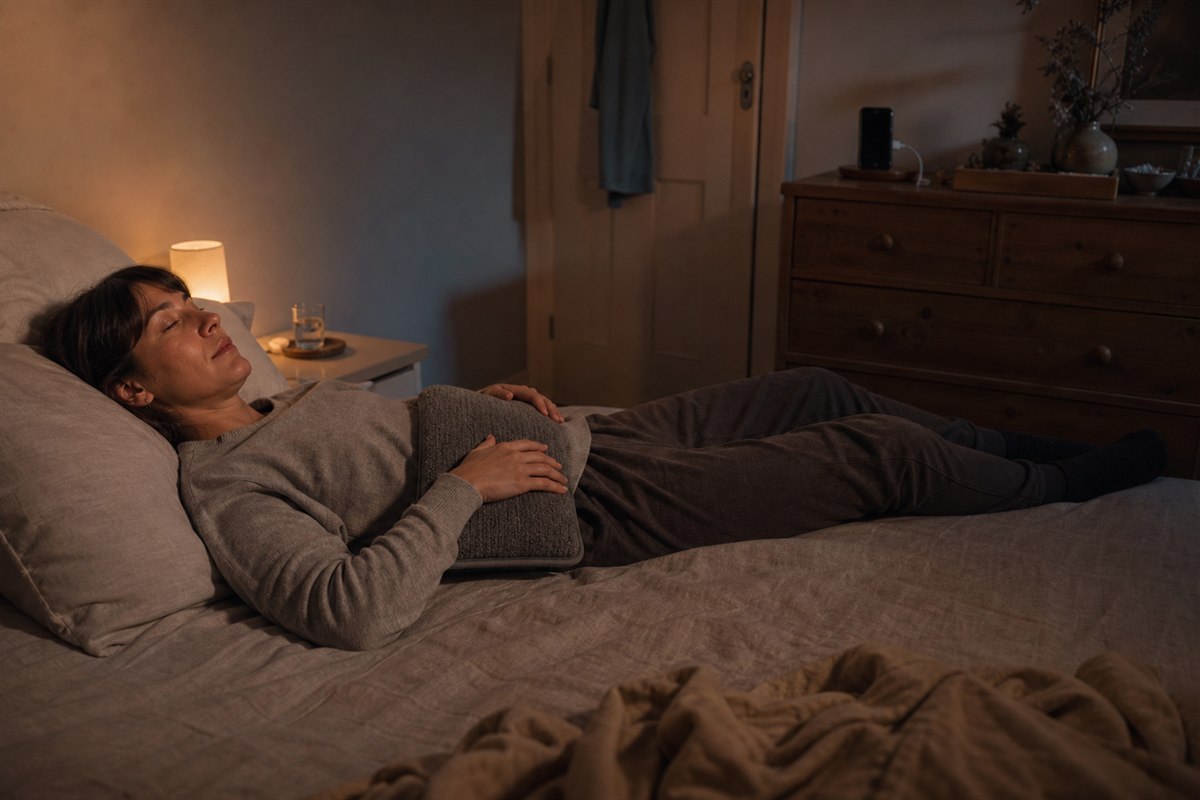
Get warm without a task attached. Lie down and put something warm across your shoulders or stomach. This step asks nothing of you except staying still — no timer to set, no temperature to judge, nothing to microwave in the dark. Heat is well established as a way to ease muscle tension, and a reusable source you can just reach for does more good here than a “better” option that requires three extra steps to prepare.
Cover your eyes and stop there. Not to meditate correctly, not to think about nothing — just to give your eyes and face a reason to stop working for a few minutes. Weight and darkness do this on their own; you don’t have to perform relaxation on top of them.
Say the one thing out loud or write it down. Whatever’s looping — tomorrow’s deadline, the thing you forgot — gets one sentence, and then you’re done with it for tonight.
Four steps, one order, no menu.
If even that feels like too much
Some nights, all four steps is still more than you have. That’s worth planning for too, instead of treating it as failure. Do the first step only, and stop there on purpose. Getting your phone out of reach and lying down with something warm on you for even two minutes is not a consolation prize — it’s the routine working at the only size that was available tonight. The version of this that helps you most isn’t the complete one. It’s the one you’ll actually do when you’re at your lowest, which means it has to survive being cut down to almost nothing.
One honest caveat
A routine like this is for ordinary depletion — the kind that comes from a long day and gets better with rest. If the exhaustion is constant, doesn’t ease up with sleep, or feels heavier than tired, that’s a conversation worth having with a doctor rather than something to try to fix with an evening ritual. This kind of routine can help you rest. It isn’t a substitute for care when something more is going on.
If you want the physical half of this already put together instead of assembled from around the house on a night when that itself feels like a task, that’s what The Unwind Set is for — a reusable heating pad and a soft, weighted eye mask, meant to sit on your nightstand so steps two and three are already one motion. The trigger and the one sentence are still yours to add. Those are the parts no product can do for you.
Further reading